
AI and Cybercrime: How Modern Attacks Are Evolving

Articles 2026 Industrial Insights: What are the key cyber threats to watch? Articles 2026 Industrial Insights: What are the key cyber threats to watch? Articles December 24, 2025 AI and cybercrime are reshaping the threat landscape by making attacks faster, cheaper, and more convincing than ever. Instead of relying only on manual effort, criminals can use AI to automate research, tailor messages, and scale campaigns across thousands of targets. This evolution doesn’t just increase volume it increases precision, which makes detection harder for businesses of every size. A modern cyber attack often starts with social engineering that looks legitimate: personalized emails, realistic language, and timing that mimics real business workflows. AI can help attackers craft messages that match an organization’s tone and reference public details about employees and partners. When one click leads to credential theft, attackers can move quickly to access cloud tools, email accounts, and internal systems. How AI is changing cybercrime tactics One major shift in AI and cybercrime is the use of AI to generate variations of the same scam. Traditional phishing used copy‑paste templates; AI-enabled scams can change subject lines, writing style, and content structure to avoid filters and reduce detection. Attackers can also automate “trial and error” at scale, testing which messages get the best response and instantly improving their tactics. Another evolving risk is impersonation. AI-generated voice or video can be used to mimic executives, vendors, or support teams. Even when deepfake technology isn’t perfect, the pressure of urgency “pay now,” “share the OTP,” “approve the request”—can push employees into risky decisions. The cybercrime investigator’s challenge For a cybercrime investigator, AI-driven attacks create two big problems: speed and ambiguity. Attacks happen faster, leaving less time to catch early signals, and the evidence trail can become noisy due to automated infrastructure changes. Investigations depend on reliable logs, strong identity controls, and clear timelines—without them, incident analysis becomes slower and more expensive. That’s why preparedness matters as much as response. Good investigation outcomes typically come from organizations that already have centralized monitoring, consistent retention of security logs, and rehearsed incident workflows. Why managed cybersecurity is growing As ai and cybercrime expands, many businesses realize they cannot maintain expert coverage around the clock with a small internal team. This is where managed cybersecurity becomes a practical strategy—outsourcing key monitoring and response functions while keeping business control and accountability in place. With managed cybersecurity services, organizations gain continuous security operations, threat detection, and faster triage when suspicious activity appears. Instead of only receiving alerts, strong providers help validate threats, prioritize real risk, and guide containment steps. This approach is especially helpful when internal teams are stretched across IT operations, compliance work, and day-to-day support. Cybersecurity as a service: speed, scale, and focus Cybersecurity as a service helps organizations adopt mature capabilities without building everything from scratch. It can include 24/7 monitoring, incident response support, reporting, and access to security specialists—delivered as an ongoing service rather than a one-time deployment. For many companies, it’s the fastest path to improve visibility and response readiness while keeping costs predictable. In practical terms, this model supports faster detection of abnormal logins, suspicious email behavior, endpoint signals, and cloud misconfigurations—areas where modern attackers increasingly operate. Choosing the best cyber security companies in Pakistan Searching for the best cyber security companies in Pakistan should be based on measurable capability, not just marketing. Look for partners that can demonstrate: Clear scope: monitoring, detection, incident response, and reporting Real operational processes: escalation paths, playbooks, and SLAs Experience across environments: cloud, on‑prem, and hybrid Actionable reporting: risks explained in business terms, not only technical logs SNSKIES supports organizations with managed security services designed to reduce risk, improve response time, and strengthen long-term security posture especially as ai and cybercrime evolves. FAQs About AI and Cybercrime What is ai and cybercrime? AI and cybercrime refers to cybercriminal activity that uses AI to automate, personalize, or scale attacks—especially social engineering, phishing, and rapid reconnaissance. How does a cyber attack evolve with AI? A cyber attack evolves through higher personalization, faster iteration, and larger scale—making scams more convincing and reducing the time defenders have to respond. What does a cybercrime investigator need to catch AI-driven threats? A cybercrime investigator needs strong logging, clear identity trails, endpoint visibility, and incident timelines to investigate quickly and preserve evidence. Are managed cybersecurity services worth it for mid-sized businesses? Yes. Managed cybersecurity services can provide 24/7 coverage and expert response without the cost of building a full internal SOC team. What is cybersecurity as a service? Cybersecurity as a service is an ongoing security delivery model that bundles monitoring, detection, response, and expertise into a subscription-based service. What is cybersecurity as a service? Cybersecurity as a service is an ongoing security delivery model that bundles monitoring, detection, response, and expertise into a subscription-based service. How to evaluate the best cyber security companies in Pakistan? When comparing the best cyber security companies in Pakistan, prioritize proven operational capability, clear deliverables, transparent reporting, and incident response readiness. Recent Post All Posts Articles AI and Cybercrime: How Modern Attacks Are Evolving January 19, 2026/ Network Security Services in 2026 | Protect Modern Enterprises January 6, 2026/ 2026 Industrial Insights: What are the key cyber threats to watch? December 24, 2025/ Older Posts
2026 Industrial Insights: What are the key cyber threats to watch?

Articles Managed Network Security Services: The Smartest Way to Secure Your IT Infrastructure Articles Managed Network Security Services: The Smartest Way to Secure Your IT Infrastructure Articles November 24, 2025 Cybercrime is no longer chaotic or random. As we move toward 2026, it is becoming an organized, automated, and highly scalable industry. Powered by artificial intelligence, automation, and mature underground economies, cyber security threats and attacks are evolving faster than most organizations can react. The defining factor of cybersecurity success will not be innovation alone, but speed—how quickly threats are detected, analyzed, and stopped. The Industrial Shift in Cybercrime In earlier years, attackers focused on building new malware. Today, they focus on efficiency. Automation and AI allow cybercriminals to reuse proven techniques at massive scale. This shift is why threats and attacks in cyber security are becoming more frequent and harder to contain. A single breach can now escalate into a full-scale incident within minutes. By 2026, attackers will rely heavily on automation to manage reconnaissance, credential harvesting, lateral movement, and data monetization. This industrial model increases both the volume and impact of cyber threats and attacks. Why Cyber Threat Intelligence Services Matter More Than Ever To counter this shift, organizations must rely on cyber threat intelligence services that deliver real-time, actionable insights. These services help security teams understand attacker behavior, emerging attack patterns, and evolving cyber threats and attack vectors. Rather than reacting after damage is done, cyber threat intelligence services enable predictive defense—identifying risks before they become breaches. In 2026, businesses without intelligence-driven security will struggle to keep up with attacker velocity. AI-Driven Attack Vectors in 2026 AI is transforming offense as much as defense. Attackers will use AI to analyze stolen data, prioritize high-value targets, and automate phishing and extortion campaigns. This evolution will significantly expand cyber threats and attack vectors, especially in identity-based attacks. When organizations ask, “what was the cyber attack?”, the answer will often involve compromised credentials, misused identities, or automated exploitation rather than traditional malware. Insider Threats: A Growing Risk A major concern for 2026 is insider risk. So, what is an insider threat cyber awareness? It refers to understanding and managing risks posed by trusted users—employees, contractors, or even automated systems. What is an insider threat cyber awareness 2026 specifically? It expands beyond humans to include AI agents, service accounts, and machine identities. Poorly managed access privileges will be one of the leading causes of cyber security threats and attacks in the coming years. The Underground Economy Becomes Smarter Cybercrime marketplaces are now structured like legitimate businesses. Services offer tailored access packages, customer support, reputation scoring, and automated escrow. This maturity accelerates cyber threats and attacks, making breaches cheaper and easier to execute. Attackers can purchase precise access based on geography, industry, or system type—dramatically increasing the success rate of attacks. Machine-Speed Defense Is No Longer Optional As attackers move faster, defenders must respond at machine speed. This means combining automation, analytics, and cyber threat intelligence services into a single operational workflow. Manual processes alone cannot keep pace with modern threats. Security teams must continuously monitor exposure, validate risks, and contain incidents in real time to reduce the impact of threats and attacks in cyber security. Why Identity Security Will Define 2026 Identity is now the primary attack surface. From stolen credentials to abused privileges, identity-based attacks dominate breach reports. Managing both human and non-human identities is essential to reducing cyber threats and attack vectors. Organizations that fail to control identity sprawl will face escalating cyber security threats and attacks, regardless of how advanced their perimeter defenses are. The Role of Global Collaboration Cybercrime operates globally, and defense must follow. Law enforcement and private-sector collaboration is helping dismantle criminal infrastructure and disrupt attack networks. Intelligence sharing strengthens cyber threat intelligence services and improves early warning capabilities across industries. How SNSKIES Helps Organizations Prepare SNSKIES delivers advanced cybersecurity solutions designed for the era of industrialized cybercrime and cyber threats. By combining threat intelligence, continuous monitoring, and automated response, SNSKIES helps organizations detect and neutralize threats before damage occurs. If your organization is preparing for 2026, investing in intelligence-led defense is no longer optional—it’s essential. FAQs What are cyber threat intelligence services? Cyber threat intelligence services provide real-time insights into attacker behavior, vulnerabilities, and emerging threats to help organizations prevent breaches. What is an insider threat cyber awareness? It is the practice of identifying and mitigating risks caused by trusted users, including employees, contractors, and automated systems. What is an insider threat cyber awareness 2026? In 2026, insider awareness includes managing AI agents, service accounts, and machine identities alongside human users. What are the most common cyber threats and attack vectors today? Credential theft, phishing, ransomware, identity misuse, and automated exploitation are leading attack vectors. Why are cyber security threats and attacks increasing each year? Automation, AI, and accessible underground services have made cybercrime faster, cheaper, and more scalable. Recent Post All Posts Articles 2026 Industrial Insights: What are the key cyber threats to watch? December 24, 2025/ Cybersecurity Awareness 2026: Future Cyber Risks and How to Prepare Effectively December 8, 2025/ Managed Network Security Services: The Smartest Way to Secure Your IT Infrastructure November 24, 2025/
Cybersecurity Awareness 2026: Future Cyber Risks and How to Prepare Effectively

Articles Cybersecurity Awareness 2026: Future Cyber Risks and How to Prepare Effectively Articles Cybersecurity Awareness 2026: Future Cyber Risks and How to Prepare Effectively Articles December 8, 2025 As digital threats continue to evolve, cybersecurity awareness becomes more critical than ever. By 2026, businesses will face faster, smarter, and more deceptive cyberattacks. This puts immense pressure on organizations to strengthen their defenses, invest in cyber security managed services, and equip teams with updated cyber awareness strategies. In this guide, you’ll learn the biggest future risks, why online security matters, and how cyber security solutions can help organizations stay prepared. Understanding the Cyber Threat Landscape of 2026 Cybercriminals are leveraging AI-driven attacks, deepfake scams, and advanced phishing campaigns that can bypass traditional defenses. Cybersecurity companies predict a surge in automated ransomware attacks and identity spoofing, making the role of a cyber security analyst and cyber security specialist more important than ever. Key threats expected in 2026 include: AI-powered phishing emails designed to mimic human behavior Ransomware targeting cloud-based infrastructure Deepfake social engineering attacks on executives Data poisoning attacks aimed at AI business tools Advanced IoT-based intrusions To combat these challenges, organizations must adopt stronger cybersecurity awareness programs and invest in reliable cyber security solutions that offer continuous monitoring and protection. Why Cybersecurity Awareness Matters in 2026 Cybersecurity awareness is no longer optional—it’s essential. As businesses rely more on automation and remote work, every device and user becomes a potential entry point. Even the most advanced cyber security managed services cannot protect a company if its people are unaware of basic security practices. Cyber awareness 2026 programs help employees: Recognize modern phishing techniques Secure devices and online accounts Understand the value of sensitive data React quickly to suspicious activities A well-trained workforce becomes the first line of defense against cyber risks. How to Improve Cyber Security Awareness Improving cybersecurity awareness requires a mix of training, technology, and consistent reinforcement. Provide employees with regular cyber awareness challenge exercises, simulate phishing attacks, and offer easy-to-understand training sessions. Encourage a security-first mindset and reward proactive reporting of suspicious activities. Why Is Online Security Important? Online security protects personal and business data from theft, fraud, and unauthorized access. Without proper security, organizations risk financial losses, data breaches, reputation damage, and operational disruption. Strong online security ensures privacy, trust, and business continuity. Key Features of Modern Cyber Security Solutions Today’s cybersecurity tools are built to protect organizations from sophisticated digital threats. Effective cyber security solutions typically include: 24/7 threat monitoring AI-based threat detection Firewall and endpoint protection Cloud security and compliance tools Data encryption and identity protection Incident response and cyber forensics These solutions help businesses identify vulnerabilities early and respond to threats faster. Key Benefits of Using Cyber Security Managed Services Partnering with trusted cyber security companies offers several long-term advantages: Reduced risk of cyberattacks Lower operational cost compared to in-house teams Access to certified cyber security specialists Faster detection and response times Continuous updates based on global threat intelligence Better compliance with international security standards Managed services ensure your organization stays secure—even when threats evolve. Strengthening Your Team With Cyber Awareness 2026 Programs Future-focused training programs help employees stay informed about new threat patterns. Interactive simulations, gamified lessons, and real-world examples make learning easier and more engaging. A strong cybersecurity culture reduces human error—the leading cause of most data breaches. Future-Proofing Your Business With Professional Cybersecurity Support A cyber security analyst monitors your environment, analyzes risks, and ensures your infrastructure stays safe. Combined with managed services, these experts help build a long-term security roadmap that protects your business well into the future. Investing in professional guidance today helps prevent costly attacks tomorrow. Conclusion Cybersecurity in 2026 demands preparation, awareness, and a proactive defense strategy. With smarter threats emerging every year, businesses must combine human awareness with advanced cyber security solutions and expert-managed services. The right approach ensures your systems, data, and reputation stay protected. Looking to secure your business with advanced cybersecurity solutions? Contact SNSKIES today for fully managed security services designed for modern threats. FAQs About Cyber Security awareness What is the biggest cyber threat expected in 2026? AI-driven phishing and automated ransomware attacks are expected to be the most dangerous threats. How often should employees undergo cybersecurity awareness training? Quarterly training is ideal, supported by frequent phishing simulations. What industries need cyber security managed services the most? Finance, healthcare, e-commerce, education, and government sectors face the highest risks. Are small businesses also at risk of cyberattacks? Yes. Hackers often target small businesses due to weaker security defenses. What role does a cyber security analyst play? They monitor systems, detect vulnerabilities, investigate threats, and strengthen overall security posture. Recent Post All Posts Articles 2026 Industrial Insights: What are the key cyber threats to watch? December 24, 2025/ Cybersecurity Awareness 2026: Future Cyber Risks and How to Prepare Effectively December 8, 2025/ Managed Network Security Services: The Smartest Way to Secure Your IT Infrastructure November 24, 2025/
Managed Network Security Services: The Smartest Way to Secure Your IT Infrastructure
Articles Managed Network Security Services: The Smartest Way to Secure Your IT Infrastructure Articles Managed Network Security Services: The Smartest Way to Secure Your IT Infrastructure Articles November 24, 2025 Introduction to Managed Network Security Services In today’s digital era, cyber threats are more sophisticated than ever. Businesses can’t afford downtime or data breaches. That’s where managed network security services come into play. SNSKIES provides intelligent, end-to-end network security services that protect your IT infrastructure, ensuring business continuity and secure operations. What Are Network Security Services? Network security services are specialized solutions designed to protect computer networks from unauthorized access, cyberattacks, and data breaches. They encompass monitoring, threat detection, and proactive defense mechanisms to secure your IT environment. Key Components of Network Security Services Firewall management Intrusion detection and prevention Endpoint security monitoring VPN and secure remote access Security audits and compliance checks With these components, businesses can operate safely without constantly worrying about cyber risks. Why Network Security Is Important A single breach can result in lost revenue, damaged reputation, and regulatory penalties. Effective network security safeguards sensitive data, ensures uninterrupted operations, and builds trust with customers and partners. Types of Network Security Services Network Security as a Service (NSaaS) Network security as a service delivers cloud-based security solutions, reducing the complexity of managing in-house security. It’s scalable, flexible, and ideal for modern organizations. Managed Network and Security Services This involves outsourcing network security operations to expert providers like SNSKIES. Managed network and security services include monitoring, threat detection, and automated response, letting businesses focus on growth while staying secure. Benefits of Managed Network Security Services 1. Proactive Threat Detection Managed services use advanced monitoring and analytics to detect threats before they escalate, protecting your business 24/7. 2. Cost-Effective Security Management Instead of investing in costly in-house teams, businesses gain access to expert network security solutions with predictable costs, optimizing budgets and resources. Network Security Solutions Offered by SNSKIES SNSKIES provides comprehensive network security solutions that cover cloud, on-premises, and hybrid environments. From endpoint protection to intrusion detection, SNSKIES ensures your IT infrastructure remains secure and compliant. Best Branch Network Service for Enhanced Security For multi-branch organizations, SNSKIES delivers the best branch network service for enhanced security, ensuring each location benefits from centralized monitoring and uniform protection policies. How Managed Network Security Services Improve Business Operations By implementing robust network security management, companies experience minimal downtime, reduced risk exposure, and streamlined IT operations. This leads to higher productivity and more confident decision-making. Choosing the Right Network Security Service Providers Selecting a trusted provider is crucial. Look for expertise, proven solutions, and 24/7 monitoring capabilities. SNSKIES stands out as a leading network security service provider, delivering tailored solutions for every business size. Network Security Management Best Practices Regular updates and patching Continuous network monitoring Access control and user management Incident response planning Employee security awareness training Following these best practices ensures long-term security success. Common Threats Prevented by Managed Network Security Services Managed services protect against: Ransomware and malware attacks Phishing and social engineering Insider threats Unauthorized access and data leaks How SNSKIES Delivers End-to-End Security Services in Network Security SNSKIES combines expert analysts, advanced tools, and proactive strategies to provide security services in network security that prevent breaches, manage risks, and optimize performance. Secure Your IT Infrastructure Today Don’t wait for a cyberattack to take action. Strengthen your network with managed network security services by SNSKIES and ensure continuous, worry-free operations. Conclusion Managed network security services are no longer optional — they’re essential for protecting modern IT infrastructures. By outsourcing to experts like SNSKIES, businesses benefit from proactive threat detection, cost-effective solutions, and end-to-end protection. Investing in managed network security services ensures security, compliance, and uninterrupted business operations. FAQs About Managed Network Security Services What are managed network security services? They are outsourced solutions that provide monitoring, threat detection, and protection for your IT networks, handled by experts. Why is network security important for businesses? It protects sensitive data, ensures operational continuity, and safeguards your business from cyberattacks. What is network security as a service (NSaaS)? NSaaS delivers cloud-based security solutions, reducing the need for in-house security infrastructure. How do I choose the right network security service provider? Look for experience, 24/7 monitoring, advanced tools, and customizable solutions tailored to your business. How do managed network security services improve operations? They reduce downtime, prevent threats, optimize IT resources, and allow teams to focus on business growth. Recent Post All Posts Articles 2026 Industrial Insights: What are the key cyber threats to watch? December 24, 2025/ Cybersecurity Awareness 2026: Future Cyber Risks and How to Prepare Effectively December 8, 2025/ Managed Network Security Services: The Smartest Way to Secure Your IT Infrastructure November 24, 2025/
AI SOC Solutions: Transforming Security Operations with Intelligent Automation
Articles AI SecOps: Redefining Security for the Digital Era Articles AI SecOps: Redefining Security for the Digital Era Articles November 12, 2025 Cyber threats continue to evolve, and traditional security approaches are no longer enough to keep organizations protected. This is where AI SOC solutions bring a new level of intelligence, automation, and real-time insight into security operations. By integrating advanced analytics and automated workflows, businesses gain a stronger and more proactive defense strategy. What Is AI SOC? An AI SOC represents the next step in modern cybersecurity. Instead of relying solely on manual monitoring, an AI-driven Security Operations Center uses machine learning, behavioral analytics, and automated processes to detect, analyze, and respond to threats faster. This approach not only improves efficiency but also supports the daily responsibilities of the ai soc analyst and traditional soc analyst who must manage high alert volumes. AI and Advanced Detection Analytics Combining AI with Advanced Detection Analytics enhances how anomalies and suspicious patterns are identified. These capabilities evaluate user behavior, network traffic, and system activity in real time. This reduces false positives and improves the accuracy of threat detection. With this advanced layer of intelligence, organizations can take action earlier and avoid widespread disruption. The Evolving Role of SOC Analysts and SOC Managers Security teams today face more alerts and more complex threats than ever. The role of the soc manager and analysts becomes far more efficient when supported by AI-driven insights. Instead of handling repetitive tasks, analysts can focus on threat hunting, incident response strategies, and continuous improvement of security operations. AI enhances human expertise—not replaces it. AI-Powered SecOps: A Smarter Way to Work Modern secops require speed, visibility, and coordinated response. AI-powered secops deliver all three by automating correlation, enriching alerts, and prioritizing critical incidents. This ensures that teams can quickly identify and respond to high-risk events while maintaining a scalable and resilient security approach. This intelligent workflow significantly reduces alert fatigue and strengthens operational performance. What Is SOC Automation? Many organizations ask: what is SOC automation? It refers to the use of automated workflows, rule-driven actions, and AI insights to handle security events more efficiently. Instead of relying on entirely manual processes, automation enables real-time response, faster triage, and consistent handling of repetitive tasks. This is essential for reducing workload and improving the response time of security teams. Security Operations Center Automation With security operations center automation, businesses gain better visibility across systems, applications, networks, and cloud environments. Automated playbooks, integrated threat intelligence, and machine-learning workflows help reduce investigation time and ensure consistent, high-quality responses. This modern approach transforms the SOC from reactive to fully proactive. SOC for Cybersecurity A well-structured soc for cybersecurity remains the backbone of any organization’s defensive framework. Whether monitoring abnormal behavior, identifying vulnerabilities, or responding to active threats, the SOC plays a crucial role in protecting sensitive data and maintaining operational continuity. AI-enhanced SOC capabilities help organizations stay ahead of modern cyber risks without overwhelming their internal teams. Integration with Modern SecOps Tools AI SOC solutions integrate seamlessly with today’s best technologies, including platforms like Fortinet SecOps. These integrations create a unified ecosystem where detection, response, and automation work together. This results in improved response times, better analytics, and a more resilient security structure overall. Best SOC Services for Cybersecurity Organizations seeking the best SOC services for cybersecurity often look for three essential features: Real-time monitoring Automated threat detection Rapid incident response AI-driven SOC models deliver exactly that. They provide consistent and continuous protection while reducing the manual effort required from internal teams. This makes it easier for businesses to stay secure without significantly increasing operational overhead. Strengthening Security Operations for Modern Businesses Strong security operations are essential for navigating the threat landscape. AI SOC solutions empower businesses by combining automation, analytics, and expert-driven insights into a single unified defense system. This leads to improved detection rates, reduced response time, and a more adaptive cybersecurity posture. With intelligent automation in place, organizations no longer operate reactively. Instead, they gain an active, predictive approach to cyber defense. FAQs About AI Soc Solutions How does an AI SOC improve security operations for businesses? An AI SOC improves detection accuracy, accelerates response time, and automates repetitive tasks. With intelligent analytics and automation, businesses get stronger protection and reduced workload for analysts. Solutions offered by SNSKIES enhance visibility and streamline modern SecOps processes. Is AI SOC suitable for small and medium-sized businesses? Yes. AI-driven security operations are scalable and can be tailored for any business size. SNSKIES provides flexible deployment options, allowing SMBs to access enterprise-grade cybersecurity without high infrastructure costs. How does SNSKIES support SOC analysts with AI automation? SNSKIES enhances analyst efficiency by integrating automated alert triage, threat correlation, and intelligent incident workflows. This allows SOC analysts to focus on deeper investigations and better decision-making. What makes SOC automation important for modern cybersecurity? SOC automation ensures faster threat response, consistent workflows, and reduced human error. By automating repetitive tasks, organizations strengthen resilience. SNSKIES helps businesses adopt automation that aligns with their existing security operations. Does SNSKIES integrate AI SOC solutions with existing security tools? Yes. SNSKIES integrates seamlessly with modern security tools, SIEM platforms, threat intelligence sources, and technologies like Fortinet SecOps. This ensures unified visibility and stronger protection across all environments. Recent Post All Posts Articles AI SOC Solutions: Transforming Security Operations with Intelligent Automation November 18, 2025/ AI Agentic SOC: The Next Evolution in Intelligent Security Operations November 13, 2025/ AI SecOps: Redefining Security for the Digital Era November 12, 2025/ Older Posts
AI Agentic SOC: The Next Evolution in Intelligent Security Operations
Articles What Is ZTNA? A Complete Guide to Zero Trust Network Access Explained Articles What Is ZTNA? A Complete Guide to Zero Trust Network Access Explained Articles November 6, 2025 In today’s cybersecurity landscape, speed and intelligence are everything. Threats evolve faster than ever before, and traditional Security Operations Centers (SOCs) struggle to keep pace. Enter the AI Agentic SOC — the next evolution in intelligent, autonomous, and adaptive cybersecurity. By combining the power of agentic AI with automated decision-making, businesses can achieve faster detection, smarter response, and stronger protection. Understanding AI Agentic SOC An AI Agentic SOC integrates AI-driven security operations with intelligent decision-making capabilities. Unlike traditional SOCs that rely on human analysts alone, an agentic SOC leverages AI agents to detect, investigate, and respond to cyber threats in real-time. These systems are designed to think, learn, and act autonomously, significantly reducing manual workload and response delays. This is what makes AI SOC automation a game-changer for enterprises seeking proactive defense mechanisms. Why Traditional SOCs Need a Transformation Traditional SOCs often depend on manual monitoring, leading to delayed responses and analyst fatigue. With rising cyber threats, the need for continuous visibility, automation, and adaptive intelligence has become vital. AI SOC analysts now use AI-powered SecOps tools that learn from patterns, anticipate potential attacks, and act before threats escalate ensuring organizations stay ahead of cybercriminals. The Power of Agentic AI in Security Operations Agentic AI SOC systems go beyond automation. They are capable of independent reasoning and adaptive response. These intelligent agents analyze complex data from multiple sources, determine the nature of potential threats, and execute mitigation protocols autonomously. Imagine having hundreds of digital analysts working 24/7 that’s what agentic AI delivers. It transforms AI in security operations from reactive monitoring to proactive prevention. Agentic AI Agents in Security Operations Agentic AI agents are designed to operate within security operations centers (SOCs) to enhance efficiency and accuracy. These agents can analyze logs, detect anomalies, and initiate remediation — all without human input. By learning continuously from past incidents, they enhance the performance of AI SecOps frameworks, making them smarter and more reliable over time. With AI SOC automation, these agents become the digital backbone of modern security infrastructure — ensuring that every incident, big or small, is addressed swiftly. Key Features of an AI Agentic SOC Autonomous Threat Detection: AI agents can identify anomalies across massive data sets within seconds. Continuous Learning: Machine learning algorithms improve response accuracy over time. Scalability: Easily expands with business growth and evolving threat landscapes. Seamless Integration: Works with existing Fortinet SecOps, firewalls, and endpoint security tools. Reduced Human Error: Automates repetitive tasks and minimizes manual oversight. Key Benefits of AI Agentic SOC for Businesses Faster Response Times: AI reduces detection-to-response time from hours to seconds. Cost Efficiency: Automation reduces dependency on large teams of analysts. Stronger Security Posture: AI’s predictive analytics identify threats before they occur. Improved Visibility: Continuous monitoring ensures full-spectrum coverage. Enhanced Compliance: Aligns with modern regulatory requirements through precise logging and tracking. AI-Powered SecOps: Transforming Cyber Defense AI-powered SecOps combines data analytics, automation, and real-time intelligence. By unifying detection and response, organizations can eliminate silos between IT and security teams. This integration allows AI SOC solutions to adapt dynamically to threats — creating the best security operations solution for businesses of all sizes. Security Operations Center Automation Automation lies at the heart of modern security operations center automation. From threat triage to remediation, AI reduces human workload while improving consistency. When combined with agentic AI SOC capabilities, businesses gain a resilient, always-on defense system capable of autonomous operation. Choosing the Best SOC Services for Cybersecurity When selecting the best SOC services for cybersecurity, businesses should focus on vendors that integrate agentic AI and automation. These solutions deliver real-time protection, enhanced visibility, and faster recovery from potential breaches. Solutions like SNSKIES AI Agentic SOC offer cutting-edge monitoring, advanced analytics, and seamless scalability — helping businesses stay secure in the era of AI-driven cyberattacks. The Future of AI in Security Operations The evolution of AI in security operations signals a future where human analysts and AI agents collaborate seamlessly. This hybrid model ensures higher precision, reduced response times, and optimized security workflows. With advancements in AI SecOps and Fortinet SecOps, the cybersecurity ecosystem will soon rely entirely on intelligent, self-learning systems. Conclusion The shift from traditional SOCs to AI Agentic SOCs represents the dawn of intelligent, adaptive, and autonomous cybersecurity. With agentic AI, organizations can finally overcome the limits of manual detection and delayed response. As cyber threats grow more complex, the integration of AI-powered SecOps becomes not just beneficial — but essential. Businesses ready to embrace this evolution will lead the next era of secure digital transformation. FAQs About Ai Agentic SOC What is an AI Agentic SOC? An AI Agentic SOC is a next-generation security operations center that uses autonomous AI agents for real-time threat detection, response, and prevention. How does AI improve SecOps efficiency? AI automates repetitive tasks, accelerates detection, and ensures accurate threat analysis reducing the burden on human analysts. What are the benefits of AI SOC automation? It enhances speed, accuracy, and scalability while reducing operational costs and minimizing human error. Is agentic AI replacing human analysts? No, agentic AI supports and augments analysts, allowing them to focus on strategic security decisions. Why choose SNSKIES for AI-powered security solutions? SNSKIES offers intelligent SOC solutions integrating agentic AI and automation to deliver proactive cybersecurity for modern enterprises. Recent Post All Posts Articles AI Agentic SOC: The Next Evolution in Intelligent Security Operations November 13, 2025/ AI SecOps: Redefining Security for the Digital Era November 12, 2025/ What Is ZTNA? A Complete Guide to Zero Trust Network Access Explained November 6, 2025/ Older Posts
AI SecOps: Redefining Security for the Digital Era
Articles SASE Solutions Explained: The Future of Cloud Security and Connectivity Articles SASE Solutions Explained: The Future of Cloud Security and Connectivity Articles November 3, 2025 As digital threats grow in complexity, AI SecOps (Artificial Intelligence for Security Operations) has emerged as a revolutionary approach to managing cybersecurity. Businesses today need more than manual monitoring—they need AI-powered SecOps that adapt, predict, and neutralize threats in real-time. Let’s explore how AI is shaping the future of intelligent security operations and why SNSKIES SOC services in Pakistan stand out as the leading solution for businesses. What Is Operation Security (OpSec)? Operation Security, or OpSec, is the process of protecting sensitive information from adversaries. It involves identifying critical data, analyzing threats, and taking proactive steps to safeguard digital assets. In the AI era, OpSec is evolving into AI-driven SecOps, where intelligent systems continuously learn from data to identify and mitigate risks faster than ever before. The Rise of AI in Security Operations Cyber threats are no longer static—they evolve dynamically. AI in security operations allows businesses to respond to threats before they escalate. With machine learning algorithms and automation, security teams can detect anomalies, predict attacks, and prioritize responses based on real-time risk analysis. This transition from reactive to proactive defense defines the AI SOC approach. Understanding AI SecOps and AI SOC AI SecOps integrates artificial intelligence with Security Operations Center (SOC) processes. This intelligent fusion enables faster detection, smarter decision-making, and more efficient operations. An AI SOC uses automation, data analytics, and machine learning to continuously monitor networks, detect vulnerabilities, and mitigate cyber incidents—ensuring constant vigilance for your digital environment. Why Traditional SOCs Are No Longer Enough Traditional SOCs rely heavily on human analysis, which can be time-consuming and error-prone. As the volume of data grows, manual monitoring becomes impractical. AI-powered SecOps enhances human intelligence by automating repetitive tasks, allowing analysts to focus on strategic response and advanced threat hunting. AI-Powered SecOps: Transforming Cyber Defense With AI SecOps, organizations can automate event correlation, anomaly detection, and even response actions. This shift enables real-time defense mechanisms that react instantly to suspicious activities. By integrating AI, businesses gain a self-learning SOC capable of adapting to emerging threats and minimizing downtime. Key Components of AI SecOps Threat Detection and Response AI identifies malicious patterns using predictive algorithms, reducing the risk of false positives and enabling immediate action. Automation in Security Operations Center (SOC) Security Operations Center automation streamlines workflows, allowing faster incident triage, ticketing, and mitigation—all with minimal human input. Machine Learning and Predictive Analysis Machine learning models within AI SOC continuously analyze threat intelligence to predict potential breaches before they occur. Benefits of AI in Security Operations Faster threat detection and response times Reduced operational costs with automation Improved accuracy through real-time analysis Scalability for organizations of all sizes Proactive defense against zero-day attacks How AI SecOps Improves Incident Response With AI-powered SecOps, incident response becomes predictive rather than reactive. AI-driven analytics identify anomalies in network behavior and suggest the most effective countermeasures—before damage occurs. Fortinet SecOps: Strengthening Security with AI Integration Fortinet SecOps combines next-gen firewall intelligence with AI automation, enabling seamless visibility across networks. By integrating with SNSKIES SOC solutions, businesses can leverage Fortinet’s AI capabilities for robust cybersecurity operations. AI SecOps for Businesses: A Smart Investment Businesses that adopt AI SecOps benefit from reduced breach risks, faster resolution, and improved compliance. In today’s digital world, this investment translates into long-term resilience and trust. Why Choose SNSKIES SOC Services in Pakistan SNSKIES offers one of the best Security Operations Center (SOC) services in Pakistan, delivering advanced AI-powered SecOps solutions tailored for enterprises. Their SOC is equipped with real-time monitoring, threat intelligence, and security operations center automation, ensuring uninterrupted business continuity. SNSKIES: Best SOC Services for Cybersecurity With 24/7 monitoring, expert analysts, and cutting-edge tools, SNSKIES provides the best SOC services for cybersecurity in Pakistan. Their AI-driven SOC enhances detection, automates responses, and strengthens your organization’s overall security posture. AI SOC and Security Operations Center Automation By merging AI and automation, SNSKIES transforms the traditional SOC into an intelligent security operations system—offering better visibility, reduced response time, and improved ROI for businesses of all sizes. Future of AI SecOps in the Cybersecurity Landscape The future of AI SecOps lies in continuous learning, cross-platform integration, and predictive defense. As cyber threats grow, AI will remain the cornerstone of advanced security operations—making intelligent SOCs the new norm for every business. Conclusion The digital battlefield is evolving—and so should your defense. AI SecOps is not just a trend; it’s the foundation of modern cybersecurity. With SNSKIES SOC services in Pakistan, businesses can experience intelligent, automated, and proactive protection that sets a new benchmark for security excellence. Ready to secure your business with AI-powered SOC? Contact SNSKIES today and experience the future of intelligent security operations. FAQs About AI SecOps What is AI SecOps? AI SecOps combines artificial intelligence and security operations to automate and enhance cybersecurity processes. How does AI SOC benefit businesses? AI SOC offers real-time threat detection, automation, and faster response times keeping your business protected 24/7. Why choose SNSKIES for SOC services? SNSKIES provides advanced AI-powered SOC solutions in Pakistan, ensuring intelligent monitoring and top-tier cybersecurity defense. What is security operations center automation? It automates tasks like incident detection, triage, and response, improving efficiency and accuracy in SOC operations. How does Fortinet SecOps integrate with AI? Fortinet SecOps uses AI-driven analytics for network protection, which, when combined with SNSKIES services, creates a powerful defense layer. Recent Post All Posts Articles AI SecOps: Redefining Security for the Digital Era November 12, 2025/ What Is ZTNA? A Complete Guide to Zero Trust Network Access Explained November 6, 2025/ SASE Solutions Explained: The Future of Cloud Security and Connectivity November 3, 2025/ Older Posts
What Is ZTNA? A Complete Guide to Zero Trust Network Access Explained
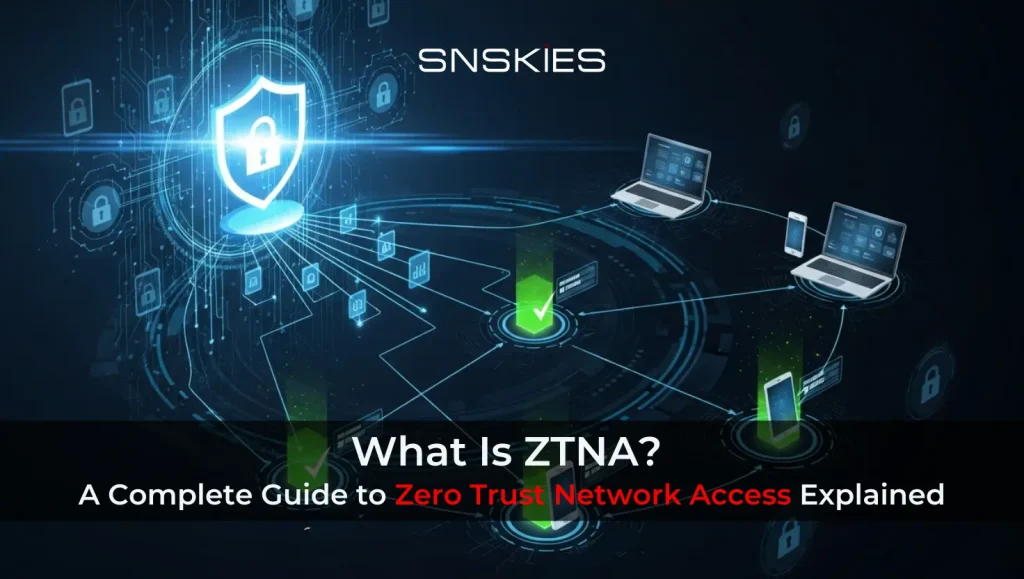
Articles AI-Driven Security Operations: The Future of Intelligent Threat Detection Articles AI-Driven Security Operations: The Future of Intelligent Threat Detection Articles October 30, 2025 In today’s evolving cybersecurity landscape, traditional defenses like VPNs are no longer enough to protect sensitive data. Cyber threats have grown more sophisticated, and the need for identity-based, least-privilege access is greater than ever. That’s where ZTNA (Zero Trust Network Access) comes in — a key part of the Zero Trust security model that protects organizations from internal and external threats. What Is ZTNA? What Is ZTNA or Zero Trust Network Access? In simple terms, ZTNA is a cybersecurity approach that assumes no user or device should be trusted by default — even if it’s inside the network. Instead, it verifies identity and context every time a user connects to an application or resource. This approach lets businesses enable remote work and cloud operations securely. Leading ZTNA vendors, like Snskies, provide advanced ZTNA services and ZTNA solutions that help companies implement Zero Trust effectively. How ZTNA Works Traditional networks grant broad access once users log in. ZTNA, however, enforces “never trust, always verify.” Each connection request goes through: Identity authentication (via SSO or MFA). Device posture checks. Context-aware authorization for specific applications. This identity-based access control reduces attack surfaces and limits exposure to potential threats. ZTNA vs VPN: The Key Differences When comparing ZTNA vs VPN, ZTNA provides stronger, more flexible protection: Granular Access: VPNs grant network-wide access; ZTNA limits users to approved apps. Scalability: ZTNA supports cloud and hybrid systems easily. Security: ZTNA eliminates lateral movement — a major VPN weakness. Because of these advantages, ZTNA is fast replacing VPNs as the new standard for secure remote access. ZTNA vs SASE: Understanding the Relationship You might wonder about ZTNA vs SASE. SASE ZTNA combines networking and security into one cloud-based framework. While SASE integrates multiple services like SD-WAN, CASB, and firewalls, ZTNA focuses on user and device access control within that ecosystem. Essentially, ZTNA is the identity-based foundation that makes SASE more secure and adaptable. ZTNA 2.0: The Next Generation of Zero Trust The term ZTNA 2.0 refers to the evolution of Zero Trust technologies. Unlike older models, ZTNA 2.0 continuously verifies users and context during every session. It adapts to new risks in real time and ensures continuous protection against dynamic cyber threats. snskies and other zero trust vendors are developing next-gen ZTNA solutions with AI-driven analytics and automated response capabilities. Best ZTNA Services for Identity-Based Access 2025 The best ZTNA services for identity-based access 2025 will focus on seamless integration, visibility, and automation. snskies leads in delivering scalable, cloud-native ZTNA platforms that provide secure, identity-driven access while improving performance and compliance. Which ZTNA Is Best for Limiting Exposure to Threats Wondering which ZTNA is best for limiting exposure to threats? The ideal solution offers deep visibility, adaptive authentication, and granular access policies. Top ZTNA vendors such as snskies, Palo Alto Networks, and Cloudflare use real-time analytics and AI to minimize risk and prevent unauthorized movement inside networks. What Is Cloudflare Zero Trust and What Is a Trust Network Understanding what is Cloudflare Zero Trust helps clarify how Zero Trust principles are applied in practice. Cloudflare Zero Trust enforces verification of every connection and encrypts all communications. Similarly, what is a trust network refers to a framework where security depends on continuous validation — not blind trust. Both concepts emphasize authenticated access, identity verification, and strong endpoint protection. Conclusion As cyber threats grow, adopting ZTNA solutions is essential for modern organizations. Whether transitioning from VPNs, integrating with SASE, or upgrading to ZTNA 2.0, implementing Zero Trust strengthens resilience and data protection. With trusted zero trust vendors like snskies, businesses can secure every user and device connection — minimizing risks and ensuring safe, identity-based access across all environments. FAQs About What is Ztna? What does ZTNA stand for? ZTNA stands for Zero Trust Network Access, a security model that restricts access based on verified user identity, device status, and context. How does ZTNA differ from a VPN? Unlike VPNs that give users broad network access, ZTNA limits access to specific applications, offering better security and scalability. Is ZTNA part of SASE? Yes. ZTNA is a core component of SASE (Secure Access Service Edge), focusing on secure, identity-based access control. What is ZTNA 2.0? ZTNA 2.0 is the next evolution of Zero Trust that continuously monitors user activity and adjusts trust levels dynamically. Who are the leading ZTNA vendors? Top ZTNA vendors include snskies, Cloudflare, Palo Alto Networks, and Zscaler, offering robust ZTNA services for secure remote and hybrid access. Why should businesses adopt ZTNA? ZTNA helps prevent unauthorized access, supports secure cloud adoption, and significantly reduces the risk of data breaches. Recent Post All Posts Articles What Is ZTNA? A Complete Guide to Zero Trust Network Access Explained November 6, 2025/ SASE Solutions Explained: The Future of Cloud Security and Connectivity November 3, 2025/ AI-Driven Security Operations: The Future of Intelligent Threat Detection October 30, 2025/ Older Posts
SASE Solutions Explained: The Future of Cloud Security and Connectivity
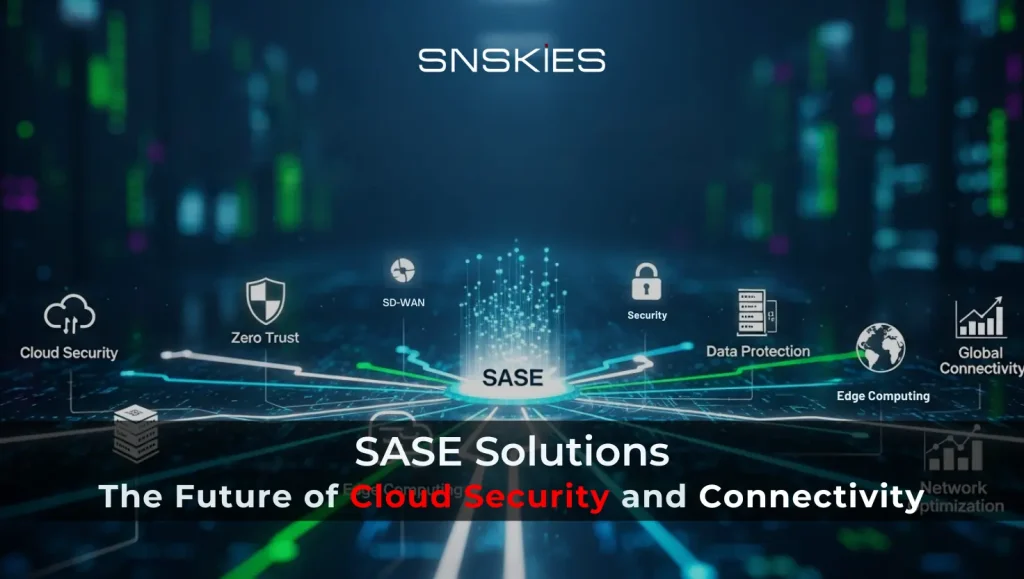
Articles Managed SD-WAN Services for Businesses Articles Managed SD-WAN Services for Businesses Articles October 29, 2025 In a world where cloud adoption and remote work are redefining how businesses operate, SASE Solutions (Secure Access Service Edge) have emerged as the backbone of secure and efficient digital transformation. By combining network security as a service and cloud-based connectivity, SASE unifies multiple security functions—like SD-WAN, CASB, SWG, ZTNA, and FWaaS—into one integrated architecture. Let’s dive into what makes SASE the future of cybersecurity and why organizations are adopting managed SASE to strengthen both security and performance. What Is SASE? So, what is SASE in simple terms? SASE (Secure Access Service Edge) is a cloud-native framework that integrates networking and security into a single service model. It delivers secure, optimized access to applications and data from any device, anywhere. In the context of cybersecurity, what is SASE in cyber security means combining software-defined networking (SD-WAN) with advanced security controls to ensure that data is protected, and users are verified before access is granted. Key Components of the SASE Architecture 1. Secure Web Gateway (SWG) The SWG (Secure Web Gateway) is a protective filter between users and the internet. It blocks access to harmful websites, prevents malware downloads, and stops phishing attacks. Acting as a web traffic guardian, it ensures users access only safe and authorized resources. 2. Cloud Access Security Broker (CASB) CASB (Cloud Access Security Broker) provides real-time monitoring and control over cloud applications. It enforces compliance and security policies, reduces data leakage risks, and enables safe cloud adoption. When integrated into a unified SASE environment, CASB becomes one of the top CASB solutions for maintaining data integrity across hybrid infrastructures. 3. Zero Trust Network Access (ZTNA) ZTNA works on the principle of “never trust, always verify.” It allows secure, identity-based access to resources, whether they are on-premises or in the cloud. Compared to VPNs, SASE vs ZTNA highlights ZTNA’s dynamic verification process, which significantly reduces the risk of unauthorized access. 4. Firewall-as-a-Service (FWaaS) FWaaS extends traditional firewall capabilities to the cloud. It inspects all traffic at the application layer and blocks potential threats. Being cloud-based, it scales easily and adapts to business needs, providing centralized security enforcement. 5. Software-Defined Wide Area Network (SD-WAN) SASE SD-WAN optimizes connectivity by routing traffic intelligently based on real-time performance metrics. It enhances user experience, minimizes latency, and ensures reliable connections—especially critical for distributed teams and remote work setups. 6. Centralized Management One of the biggest benefits of SASE is centralized management. Instead of juggling multiple security tools, SASE brings them under a single platform. This unified view allows easy monitoring, consistent policy enforcement, and simplified administration. Benefits of SASE Solutions The SASE benefits are far-reaching, offering both security and agility. Enhanced Security: Integrates ZTNA, CASB, and FWaaS for end-to-end data protection. Improved Performance: Optimized routing ensures fast, reliable access to cloud and SaaS applications. Scalability: Cloud-based architecture supports business growth without infrastructure strain. Cost Efficiency: Reduces dependency on multiple vendors and hardware investments. Visibility & Control: Offers granular insights into network and user activity through a centralized dashboard. Organizations seeking the best SASE solution for unified access can leverage these benefits to secure users and applications seamlessly—whether they’re in the office or on the move. What Is Security Service Edge (SSE)? Security Service Edge (SSE) is a subset of SASE that focuses purely on the security aspect—like SWG, CASB, and ZTNA—without the networking functions. SSE enhances SASE by strengthening visibility, access control, and compliance across hybrid and cloud environments. SASE vs SD-WAN While SD-WAN focuses mainly on improving network performance and connectivity, SASE combines those features with security layers. Essentially, SASE = SD-WAN + security functions like ZTNA, FWaaS, and CASB. This makes SASE the superior choice for businesses that need both speed and protection. SASE vs ZTNA ZTNA is a component within SASE. While ZTNA provides secure access through identity verification, SASE expands on this by combining ZTNA with network optimization, cloud access control, and firewall protection. So, ZTNA is the “who can enter,” while SASE decides “how and where they connect securely.” SASE and the Unified Client Agent (UCA) The Unified Client Agent (UCA) simplifies SASE deployment by combining multiple agents—like those for ZTNA, SWG, and SD-WAN—into one lightweight client. This reduces endpoint complexity and ensures consistent user protection across devices. SASE vs VPN Traditional VPNs create a single entry tunnel that can become a bottleneck and expose vulnerabilities. SASE, with its ZTNA and cloud-native design, verifies every user and device dynamically, offering stronger, more scalable protection. The comparison of SASE vs VPN clearly shows that SASE is built for modern, hybrid, and cloud-based infrastructures. Managed SASE Services Businesses are now opting for managed SASE to simplify implementation and management. Managed service providers deliver continuous monitoring, configuration, and threat intelligence, ensuring optimal performance and security without the complexity of in-house management. SASE and the Future of Cybersecurity As cyber threats grow more sophisticated, SASE solutions represent the evolution of network security as a service. They bridge the gap between performance and protection, empowering businesses to innovate securely in the cloud era. Adopting a managed SASE model enables organizations to future-proof their infrastructure while maintaining flexibility and compliance. FAQs About SASE Solutions What is SASE in cybersecurity? SASE integrates networking and security functions to deliver secure, cloud-based connectivity across distributed users and devices. What are the main benefits of SASE? SASE provides centralized security, scalability, cost savings, and improved performance through unified management. Is SASE the same as SD-WAN? No. SD-WAN enhances connectivity, while SASE combines SD-WAN with advanced security features like CASB and ZTNA. What is Security Service Edge (SSE)? SSE focuses on the security elements of SASE—like SWG, CASB, and ZTNA—without including SD-WAN. Why choose managed SASE? Managed SASE offers expert oversight, 24/7 monitoring, and hassle-free deployment for optimized cloud security. Recent Post All Posts Articles SASE Solutions Explained: The Future of Cloud Security and Connectivity November 3, 2025/ AI-Driven Security Operations: The Future of Intelligent Threat Detection October 30, 2025/ Managed SD-WAN Services for
AI-Driven Security Operations: The Future of Intelligent Threat Detection
Articles Unlocking Business Potential with IT Infrastructure Solutions Articles Unlocking Business Potential with IT Infrastructure Solutions Articles October 14, 2025 Introduction: The Rise of AI in Cybersecurity In today’s fast-evolving threat landscape, traditional security operations can no longer keep up with the sophistication of modern cyberattacks. Enter AI-Driven Security Operations, a revolutionary approach combining artificial intelligence, automation, and analytics to detect, respond, and neutralize threats faster than ever. What Are AI-Driven Security Operations? AI-driven security operations (AI SecOps) integrate machine learning, automation, and data analytics into cybersecurity workflows. Unlike manual systems, these intelligent platforms continuously learn from network behavior, predict potential risks, and take proactive defense actions — all in real time. Understanding the Role of AI SOC An AI SOC (Security Operations Center) is the backbone of this modern defense model. It automates repetitive security tasks, correlates vast datasets, and accelerates incident response. By using AI SOC tools, organizations gain improved visibility, reduced false positives, and faster decision-making. AI SOC Analysts: Redefining Modern Defense The AI SOC analyst leverages automation and analytics to focus on strategic decision-making instead of manual log monitoring. With AI-driven insights, analysts can quickly identify anomalies, prioritize alerts, and coordinate faster responses, strengthening the overall security operations process. AI and Advanced Detection Analytics in Action AI and advanced detection analytics bring predictive intelligence to cybersecurity. These systems analyze millions of data points — from user behavior to network patterns — to detect hidden threats before they escalate. This proactive defense reduces downtime and minimizes the risk of breaches. How AI-Powered SecOps Transforms Cyber Defense AI-powered SecOps creates a seamless blend between automation and human expertise. By continuously learning from security events, AI models identify evolving attack patterns and trigger rapid responses. This reduces incident detection time and enhances overall network resilience. What is SOC Automation? SOC automation, or security operations center automation, uses AI to streamline workflows like incident triage, investigation, and response. Tasks that once took hours now happen in seconds, improving efficiency and reducing human error. Benefits of Security Operations Center Automation Faster Response Times – AI automates detection and containment. Reduced Workload – Analysts can focus on strategic decisions. Improved Accuracy – Automation minimizes false positives. Scalability – Easily adapts to growing network environments. Fortinet SecOps: Leading the Way in AI-Driven Defense Fortinet SecOps exemplifies innovation in AI-driven security operations. It integrates AI and machine learning with end-to-end visibility and automation to create a unified defense strategy. Businesses benefit from enhanced detection, predictive analytics, and continuous protection. The Evolution of SecOps in a Digital-First World Modern SecOps has evolved from reactive monitoring to proactive threat prevention. With cloud adoption, IoT expansion, and remote work, AI in network defense has become essential for protecting digital infrastructures against evolving cyber threats. AI in Network Defense: Smarter, Faster, Stronger The use of AI in network defense empowers organizations to detect anomalies instantly. Intelligent algorithms analyze network traffic, isolate suspicious activity, and trigger automated containment. This ensures business continuity and regulatory compliance. Why Businesses Need AI-Driven Security Operations Organizations face an increasing number of cyberattacks daily. AI-driven security operations ensure businesses stay ahead by providing predictive threat detection, automated incident response, and continuous monitoring — the pillars of modern cybersecurity resilience. Best SOC Services for Cybersecurity: Key Features When selecting the best SOC services for cybersecurity, consider: 24/7 monitoring and automated detection Threat intelligence integration AI-based response orchestration Real-time analytics and reporting SNSKIES: Empowering Businesses with AI-Powered SecOps SNSKIES delivers next-generation AI-driven security operations that combine automation, intelligence, and proactive threat management. With advanced AI SOC capabilities, SNSKIES helps organizations strengthen digital defense, reduce risk exposure, and ensure regulatory compliance — enabling smarter cybersecurity for a connected world. Conclusion: The Future is AI-Driven Security The future of cybersecurity lies in automation, intelligence, and adaptability. AI-driven security operations empower organizations to detect and respond faster, reducing risks before they impact business continuity. As threats evolve, AI ensures defense remains one step ahead. FAQs About AI-Driven Security Operations What is SOC automation in cybersecurity? SOC automation refers to using AI and machine learning to automate tasks like alert triage, threat analysis, and response actions. How does AI benefit security operations? AI improves speed, accuracy, and efficiency, allowing faster detection and resolution of security incidents. What is the role of an AI SOC analyst? An AI SOC analyst uses intelligent systems to monitor threats, analyze data, and enhance incident response strategies. What are the advantages of AI-powered SecOps? It provides real-time visibility, predictive analytics, and automated incident handling, reducing manual intervention. Why choose SNSKIES for AI-Driven Security Operations? SNSKIES offers advanced AI SOC and automation tools that protect businesses through intelligent, scalable, and secure cybersecurity solutions. Recent Post All Posts Articles Managed SD-WAN Services for Businesses October 29, 2025/ Best Server Storage Solutions | SNSKIES Network Storage & Data Management October 23, 2025/ Unlocking Business Potential with IT Infrastructure Solutions October 14, 2025/ Older Posts